The Adams spectral sequence

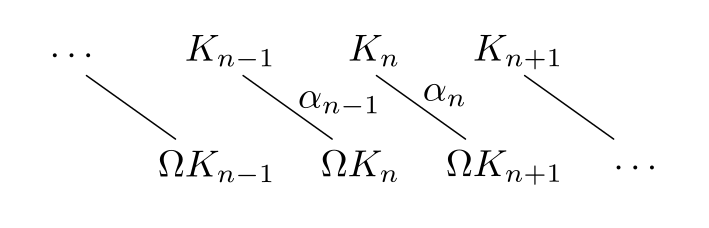
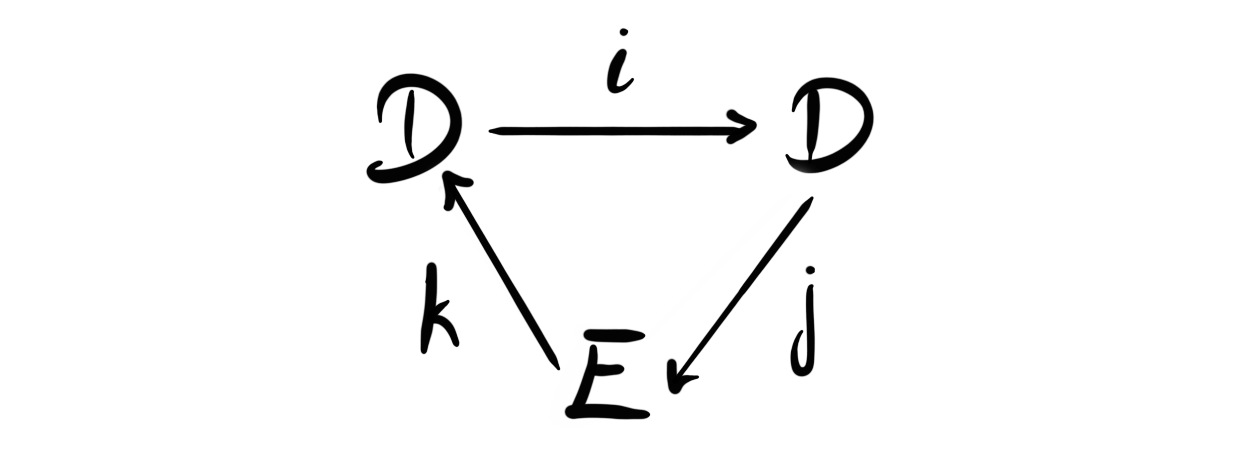
Recently my friend Elias started his own math blog adventure, and his first post gave a nice introduction to spectral sequences. Reading it I remembered that I should really understand some of the parts better myself, because a lot of the arguments one makes in chromatic homotopy theory are based on spectral sequences. There is a framework for constructing spectral sequences that are not covered in my old post on them, as well as Elias’ post, and that is creating spectral sequences from exact couples. So, since I will use these techniques later in my research, and probably later on this blog, I thought it worthwhile to discuss. In particular we look into producing spectral sequences from filtered spectra, as this is the part that is most relevant for my research. ...
February 17, 2022

Bousfield localization

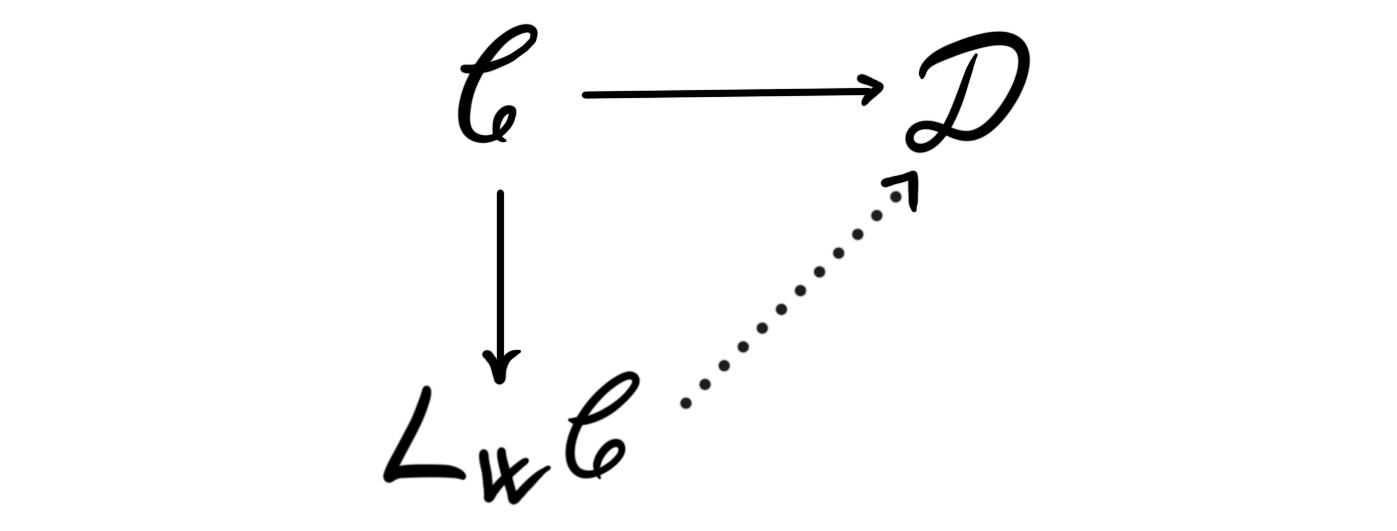
Topology, particularly homotopy theory, is hard. The scenes where these kind of mathematics happen are immensely complicated; the category of topological spaces; the category of spectra. The problem is that there is simply too much information to try to capture by using simple tools that we can actually understand properly. Trying to classify topological spaces or spectra is a feat that many deem impossible, it is simply too difficult. So, how can we try to fix this? We take inspiration from other fields, where similar situations occur and then try to translate into our own situation. Take for example abelian groups. We have no classification of all abelian groups, but there are certain constructions that help us study them. We have a classification of finitely generated abelian groups, where we can decompose any abelian group $A$ into understandable pieces: a free part $\mathbb{Z}^r$ and a torsion part $\mathbb{Z}/p_1^{k_1}\oplus \ldots \oplus \mathbb{Z}/p_t^{k_t}$. For all abelian groups things get more complicated, but there are nice groups that have classifications, like divisible groups, which are direct sums of copies of $\mathbb{Q}$ and Prüfer groups $\mathbb{Z}(p^\infty)$. The general approach seems to be to split the complicated groups into smaller pieces, or to study them via some easier groups. If we just consider $\mathbb{Z}$ for a moment, we can for a prime $p$ study ...

December 2, 2021

Complex cobordism cohomology

In the next couple years I will need to understand the ins and outs of different cohomology theories and the spectra that represents them. Some of the most important of these (for my research) can be described using $MU$ — the complex cobordism spectrum. We briefly met this spectrum — or at least its cohomology theory — when we discussed formal group laws. There we explained briefly a theorem of Quillen, stating that the universal formal group law over the Lazard ring corresponds to complex cobordism cohomology. We did not cover what complex cobordism actually is, so that is the plan for this post. ...

November 18, 2021

The homotopy groups of the spheres. Part 1

Recently I gave a talk about the homotopy groups of spheres, and as usual, I try to collect my thoughts on this blog before (or after) presenting. The homotopy groups of spheres have featured several times on this blog, and we have made some effort into calculating them for some small dimensions. In the talk I wanted to showcase some methods used to calculate these groups, as well as doing some of the “calculations”. We have met several of the tools before, like the long exact sequence from a fibration and the Freudenthal suspension theorem, but we will also meet some new ones, like the $J$-homomorphism and the $h$-cobordism group. These two are methods for calculating the stable homotopy groups of spheres, or at least some of their subgroups. For the low dimensional cases, these subgroups will luckily be the entire groups. Due to the length of the post I have split it into two: one covering the unstable homotopy groups, mostly focusing on the Hopf fibration, and one covering the stable groups, mostly focusing on the image of the $J$-homomorphism. Before we start we recall the definition of the homotopy groups of spheres. ...

October 26, 2021

Formal group laws

Recently we have covered a lot of heavy topology and abstract mathematics, so today I thought we would cover something else — something maybe a bit easier to grasp. We will introduce the concept of formal group laws, and a bit on why they are interesting. Introduction and definition To not just spew out the definition straight away, we look at a situation where formal group laws arise very naturally. Let $G$ be a one-dimensional commutative Lie group (Think here of the real numbers $\mathbb{R}$ or the circle group $S^1$). This group has a continuous product, $m:G\times G\longrightarrow G$, which locally can be described by a real-valued function in two variables. This function has a Taylor expansion around the origin, which is a power series in two variables. Denote this power series by $F$. This power series satisfies some axioms because of the group structure we have on $G$, these axioms are identity, commutativity and associativity. In more mathematical terms this means that the following statements hold ...

September 3, 2021

A first look at spectra

Even though this blog is not centered around a specific topic, we have during the last year looked more frequently at certain topics than others, such as (co)homology theory, homotopy theory and category theory. We will continue this trend today as we will try to find a solid reason for a particular object to exist. These objects were briefly mentioned in the earlier post on tensor triangulated categories, namely spectra. These objects are hugely important to the field of algebraic topology, one reason being that they are intimately linked to cohomology. This intimate connection is the study of todays blog post1. ...

August 20, 2021

On formal DG-algebras

I have recently handed in and defended my master thesis in mathematics, so I though I would go through its abstract and try to explain what it’s all about. We look at formality of DG-algebras, Massey products, A_infinity-algebras and how we can use these to some interesting results.

July 19, 2021

The associating homotopy

In the two last posts we have been discussing operations that are associative up to homotopy, and where such operations might arise naturally in topology. One claim I made, which I later realized was maybe a bit unmotivated and in need of some clarification was how some higher arity maps actually defined (or were defined by) homotopies between combinations of the lower arity maps. We also purely looked at this in a topological setting, but in algebraic topology we often translate to algebraic structures, so I also wanted to see clearly that the same constructions hold in that setting. To be more precise I am talking about the claim that a map we denoted by $m_3$ was a homotopy between $m_2(id\otimes m_2)$ and $m_2(m_2 \otimes id)$, where $m_2$ was a product induced through a homotopy equivalence. Don’t worry if you don’t recall the definitions and this problem, we will go through it again shortly. Today we in fact upgrade this earlier homotopy equivalence slightly such as to have a bit more to work with. As said we also take a turn away from standard topology and make our choice of “space” for this post to be chain complexes of vector spaces. I will not cover in detail why this is a reasonable thing to do but I will mention that the de Rham complex of a manifold, the rational singular cochains on a topological space and the rational cohomology of a topological space are all such structures. So, if we believe that algebraic topology is a nice way to study spaces, then studying these should be highly relevant. ...

April 3, 2021

Spaces with operations

In the most recent blog post we discussed homotopy associativity and how to transfer algebraic structures on topological spaces. There we in particular used topological groups, which are topological spaces with group structures. That said, any group is a topological group by equipping it with the discrete topology. So if we want to study some actual topology, and not just glorified group theory, we need to look at where multiplications and binary operations arise naturally in topology. ...

March 4, 2021

Homotopy associativity

Imagine we have a system of two topological spaces $f:T\longrightarrow G$. We are often interested in knowing if a certain property on the space $G$ can be transferred through f such that we have the same property on $T$. If f is a nice enough morphism an example could be a topological invariant of $G$, for example its Euler characteristic. In this post we are more interested in transferring other things than invariants, more specifically structures. If $G$ has an algebraic structure, for example a group structure, can we then transfer the same or some other similar structure onto $T$ through $f$? ...

February 12, 2021