Exotic algebraic models

This blog-post is dedicated to this day, $\pi$-day (14th of march), where we celebrate $\pi_*$, the stable homotopy groups. As has been the case a couple of times already, when faced with an increased workload I tend to neglect writing on this blog. It is only natural that increased amounts of work in one section lead to a decreased amount of work in another — there is, after all, only a finite amount of time given to us. But, for the remainder of my PhD I will solely focus on research and outreach, hence I will hopefully have some more time to write and think. This post has been a long time coming and features the precise area of mathematics where I do most of my research, namely exotic algebraic models. I will throughout this post, and its sequels, explain what these are and connect it to almost all the previous blog posts I have made for the last couple of years. This will also set up some of the needed background for presenting my own research, which I will do once I am done writing the paper presenting it. ...
March 14, 2024

Hopf algebroids

Introduction In the last blog post we introduced and studied adapted homology theories. Given a stable $\infty$-category $\mathcal{C}$ and $\mathcal{A}$ an abelian category with enough injectives together with a local grading $[1]\colon \mathcal{A}\longrightarrow \mathcal{A}$, an adapted homology theory is a functor $$H\colon \mathcal{C}\longrightarrow \mathcal{A}$$such that $H$ is additive, sends fiber sequences to long exact sequences, sends the suspension $\Sigma$ of $\mathcal{C}$ to the shift $[1]$ of $\mathcal{A}$ and such that we can lift injectives in $\mathcal{A}$ into $\mathcal{C}$ through $H$. We explored which categories $\mathcal{A}$ can actually exist in this setting, and saw that they had to be closely related to the Freyd envelope $A(\mathcal{C})$ of $\mathcal{C}$. More specifically, $\mathcal{A}$ had to be the sheafification of $A(\mathcal{C})$ with respect to a topology on $\mathcal{C}$ determined by $H$, which we called the $H$-epimorphism topology. ...

May 9, 2023

Adapted homology

Introduction In the last post we studied homology theories as abstract functors from stable $\infty$-categories to abelian categories. We showed that for every stable $\infty$-category $\mathcal{C}$ there is a universal homology theory which all others factor through, namely the Yoneda embedding into the Freyd envelope, $$ y\colon \mathcal{C}\longrightarrow A(\mathcal{C}). $$The fact that this is universal means that for any homology theory $H\colon \mathcal{C}\longrightarrow \mathcal{A}$ there is an essentially unique factorization ...

March 24, 2023

Universal homology

New year; same me; new math. During the fall I said that I wanted to post on this blog monthly, but that did not happen for some reason. I thought I’d try again this semester, but maybe I am setting this not that high bar still too high for my self. For some reason there seems to be fewer hours in the day than it used to. The cover page for the post is generated by Dalle·2 using the prompt “A man finding the universal piece, old painting” – a true work of art. ...

January 31, 2023

Chromatic redshift

In a recent lunch conversation with Nils Baas we, among a plethora of other things, discussed the chromatic redshift phenomenon in stable homotopy theory. Nils was explaining some things about the results he had published together with Bjørn Dundas and John Rognes on using $2$-vector bundles to explain the algebraic K-theory of topological K-theory, i.e. $K(ku)$. This spectrum has height $2$, and since $ku$ has height $1$ this exhibits a phenomenon called redshift. The word redshift is used due to the word “chromatic” used for the height filtration of the stable homotopy category. Since we increase the height by one, we in some sense get our electro-magnetic frequency (which in this analogy is chromatic height) “shifted” towards the red end of the spectrum. This phenomena has been studied for many years and is the background for one of the more important long-standing conjectures in chromatic homotopy theory, namely the chromatic redshift conjecture. This conjecture roughly states that the behaviour exhibited above by $ku$ is not specific to $ku$. More specifically: the algebraic K-theory of a spectrum shifts the height by $1.$ Nils knew of but had not read the recent paper proving the last piece of the puzzle of this conjecture. The paper in question is titled “The chromatic nullstellensatz” and is a beastly paper of over a hundred pages containing mostly highly technical proofs and computations. I sent him the arXiv link on email and added my short thoughts about the proof. After sending it I realized I could expand a bit upon the comments I made to him about the proof and post it as a blog post. I have after all claimed that I want to be better at writing and publishing blog-posts, as well as produce some shorter posts. While digging into the proof and trying to expand upon the comments I made the post turned a bit longer and more technical than planned. Perhaps this is good, as it reflects the immense technicality and complexity of both the research area, conjecture and the proof. Let me just state before we start that there are details of the proofs and explanations I have swept under the rug — a rug that contains much of the actual difficulties and technicalities. I do not claim to understand everything in the proof; any wrong interpretation or wrong idea is on me and not the authors in any of the papers mentioned. ...

November 29, 2022

Periodic torsion is torsion periodic

Hi, long time no see. I used to be very persistent about writing at least one blog-post each month, but as one can see, I have taken a break for a couple months due to vacation and increased teaching and lecturing duties at NTNU. Incidentally it coincided exactly with the 2 year mark of having posted at least once a month, often more. I have been writing stuff, but not anything worth posting. Anyway, I wanted to get into the flow of posting once a month again, as it really helps me with learning and focusing on certain topics Im interested in, and I have been contacted by several people who find the posts illuminating and helpful for understanding a topic. This post is a long time coming, as I started writing it in March… Anyway, lets get to some mathematics, but before that I want to mention that the cover image is generated by Dall-E 2 using the prompt “periodic derived category painting”. ...

October 11, 2022

Johnson-Wilson theory

It has been some time since we studied at the correlation between formal group laws, which were certain power series that looked like Taylor expansion of multiplication on a Lie group, and complex oriented cohomology theories. In particular, we learned that these two completely separate notions had a common universal object. The universal formal group law over the Lazard ring was the same as the formal group law determined by the universal complex oriented cohomology theory — complex cobordism cohomology. Ever since that time we have not encountered formal group laws in any interesting manner, but, today is the day where we do so. The continuation of studying formal group laws — and later, formal groups — will be very important in understanding the field of chromatic homotopy theory, as they are highly linked. In some sense, the algebraic geometry of formal groups corresponds to the stable homotopy theory of complex oriented cohomology theories. One very important feature of this correspondence is the concept of height. The algebraic geometry of formal groups can be filtered by a variable called height, and this — through the correspondence — gives a filtration on spectra. In this blog post we will define this concept of height, and produce some new spectra in light of this new technology. ...

April 29, 2022

Stable infinity-categories

This semester I am taking part in a seminar on $\infty$-categories, administered by Rune Haugseng. So far we have covered roughly: the basic definitions, fibrations, limits, colimits, Joyal’s lifting theorem, equivalences, straightening, Yoneda lemma, adjunctions and Kan extensions. This week it is my turn to give a talk on stable $\infty$-categories, and this blog post will hopefully be some sort of lecture notes for this talk. The intersection of things in this post and the contents of the talk should at least be non-empty. ...

March 30, 2022

The Adams spectral sequence

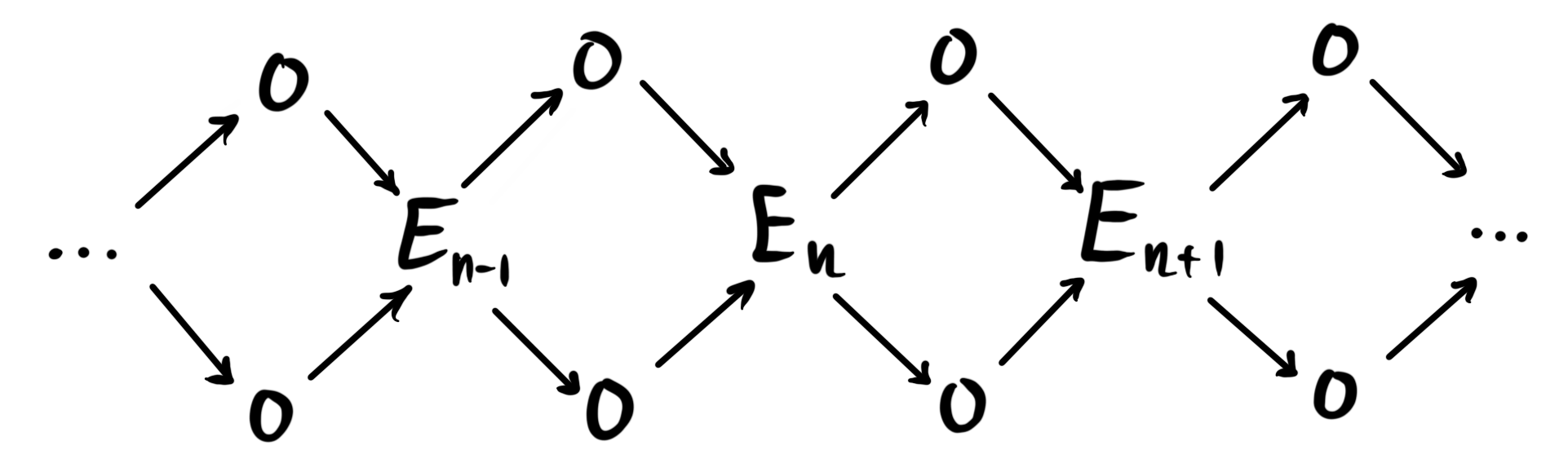
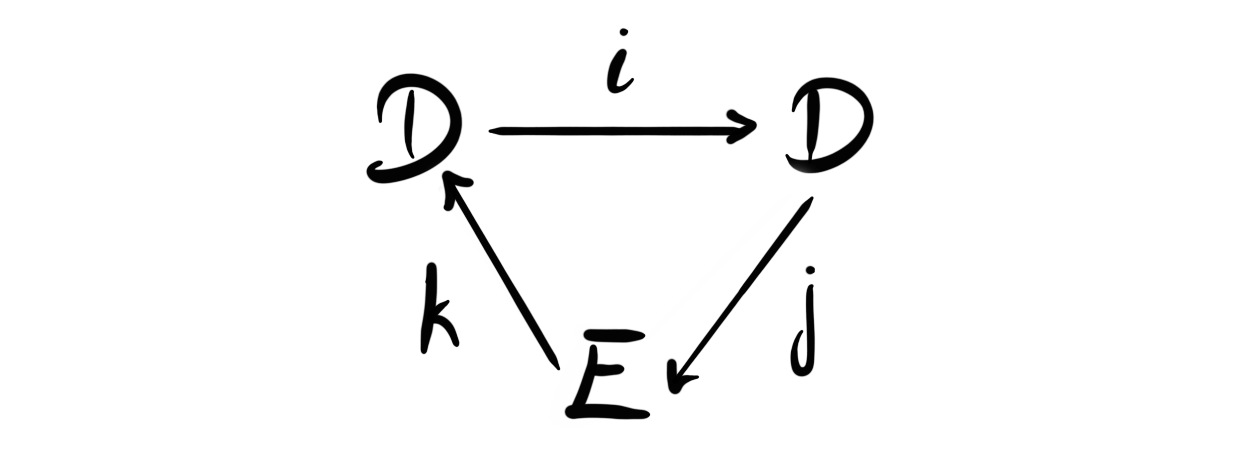
Recently my friend Elias started his own math blog adventure, and his first post gave a nice introduction to spectral sequences. Reading it I remembered that I should really understand some of the parts better myself, because a lot of the arguments one makes in chromatic homotopy theory are based on spectral sequences. There is a framework for constructing spectral sequences that are not covered in my old post on them, as well as Elias’ post, and that is creating spectral sequences from exact couples. So, since I will use these techniques later in my research, and probably later on this blog, I thought it worthwhile to discuss. In particular we look into producing spectral sequences from filtered spectra, as this is the part that is most relevant for my research. ...

February 17, 2022

Brown-Peterson cohomology

Over the holidays sadly Edgar H. Brown passed away. He was one of the influential men behind many of the concepts this blog has featured and will feature in the future. This post is in particular focused on one of these concepts, namely Brown-Peterson cohomology and the Brown-Peterson spectrum. In the last post we developed the category of $p$-local spectra, and in the post before that we explored complex cobordism cohomology. Today we will merge these two together, and try to understand what happens to the complex cobordism spectrum $MU$ when we travel to the $p$-local category. The spectrum $MU$ is a normal spectrum — it is not $p$-local. But, as we now know, we can create a $p$-local version of it by $p$-localizing it. We then get a spectrum $MU\wedge \mathbb{Z}_{(p)}$ which we simply denote by $MU_{(p)}$. This is the spectrum we want to understand today. The idea for understanding $MU_{(p)}$ will be to split it into nicer pieces which have similar — and actually better — properties. ...

January 20, 2022