Exotic algebraic models

This blog-post is dedicated to this day, $\pi$-day (14th of march), where we celebrate $\pi_*$, the stable homotopy groups. As has been the case a couple of times already, when faced with an increased workload I tend to neglect writing on this blog. It is only natural that increased amounts of work in one section lead to a decreased amount of work in another — there is, after all, only a finite amount of time given to us. But, for the remainder of my PhD I will solely focus on research and outreach, hence I will hopefully have some more time to write and think. This post has been a long time coming and features the precise area of mathematics where I do most of my research, namely exotic algebraic models. I will throughout this post, and its sequels, explain what these are and connect it to almost all the previous blog posts I have made for the last couple of years. This will also set up some of the needed background for presenting my own research, which I will do once I am done writing the paper presenting it. ...
March 14, 2024

Adapted homology

Introduction In the last post we studied homology theories as abstract functors from stable $\infty$-categories to abelian categories. We showed that for every stable $\infty$-category $\mathcal{C}$ there is a universal homology theory which all others factor through, namely the Yoneda embedding into the Freyd envelope, $$ y\colon \mathcal{C}\longrightarrow A(\mathcal{C}). $$The fact that this is universal means that for any homology theory $H\colon \mathcal{C}\longrightarrow \mathcal{A}$ there is an essentially unique factorization ...

March 24, 2023

Universal homology

New year; same me; new math. During the fall I said that I wanted to post on this blog monthly, but that did not happen for some reason. I thought I’d try again this semester, but maybe I am setting this not that high bar still too high for my self. For some reason there seems to be fewer hours in the day than it used to. The cover page for the post is generated by Dalle·2 using the prompt “A man finding the universal piece, old painting” – a true work of art. ...

January 31, 2023

Johnson-Wilson theory

It has been some time since we studied at the correlation between formal group laws, which were certain power series that looked like Taylor expansion of multiplication on a Lie group, and complex oriented cohomology theories. In particular, we learned that these two completely separate notions had a common universal object. The universal formal group law over the Lazard ring was the same as the formal group law determined by the universal complex oriented cohomology theory — complex cobordism cohomology. Ever since that time we have not encountered formal group laws in any interesting manner, but, today is the day where we do so. The continuation of studying formal group laws — and later, formal groups — will be very important in understanding the field of chromatic homotopy theory, as they are highly linked. In some sense, the algebraic geometry of formal groups corresponds to the stable homotopy theory of complex oriented cohomology theories. One very important feature of this correspondence is the concept of height. The algebraic geometry of formal groups can be filtered by a variable called height, and this — through the correspondence — gives a filtration on spectra. In this blog post we will define this concept of height, and produce some new spectra in light of this new technology. ...

April 29, 2022

Stable infinity-categories

This semester I am taking part in a seminar on $\infty$-categories, administered by Rune Haugseng. So far we have covered roughly: the basic definitions, fibrations, limits, colimits, Joyal’s lifting theorem, equivalences, straightening, Yoneda lemma, adjunctions and Kan extensions. This week it is my turn to give a talk on stable $\infty$-categories, and this blog post will hopefully be some sort of lecture notes for this talk. The intersection of things in this post and the contents of the talk should at least be non-empty. ...

March 30, 2022

The Adams spectral sequence

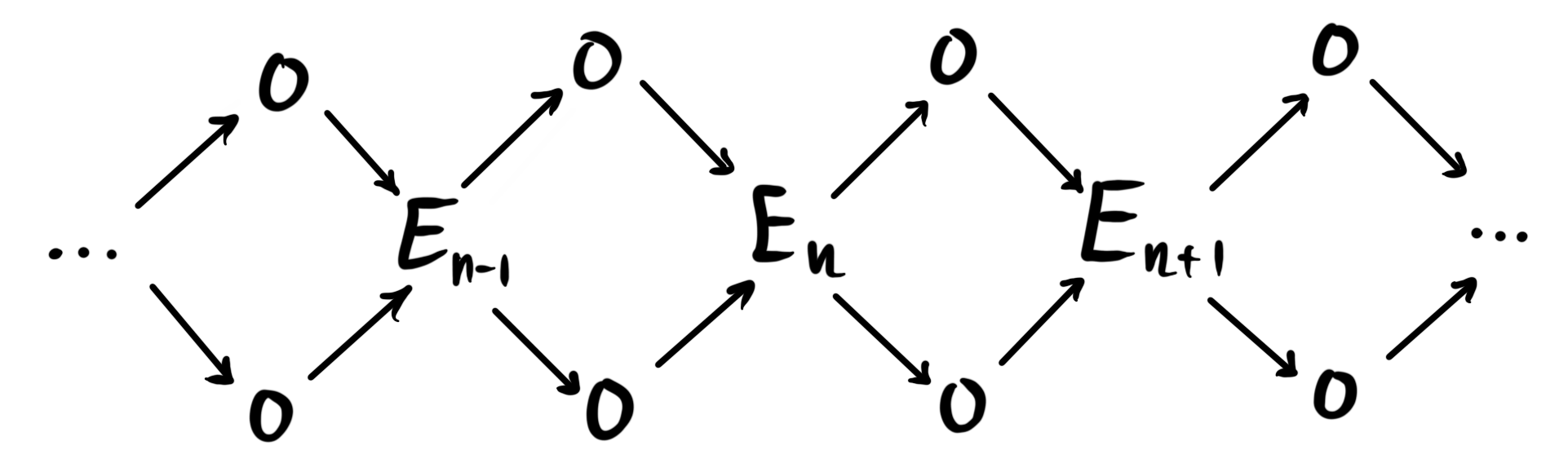
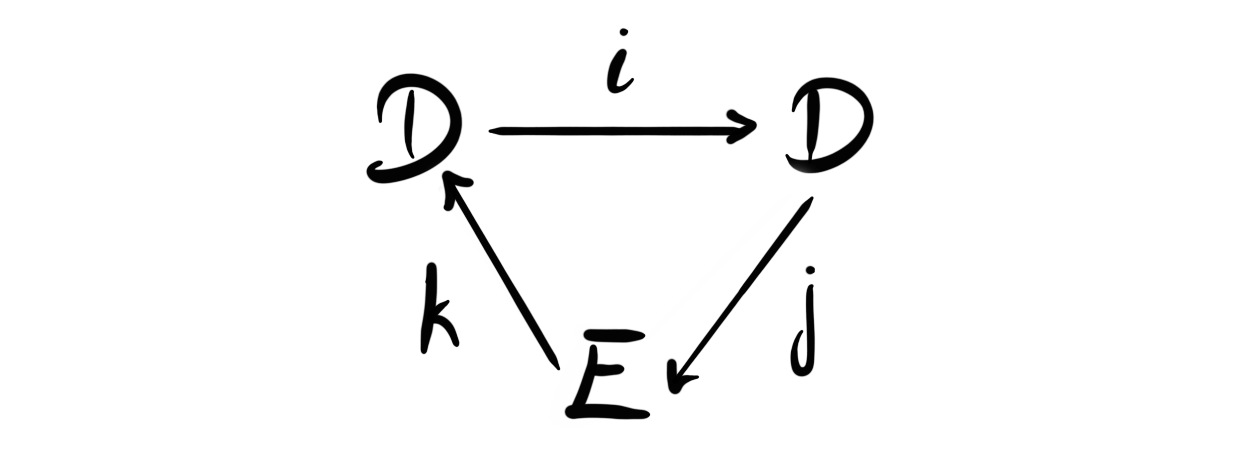
Recently my friend Elias started his own math blog adventure, and his first post gave a nice introduction to spectral sequences. Reading it I remembered that I should really understand some of the parts better myself, because a lot of the arguments one makes in chromatic homotopy theory are based on spectral sequences. There is a framework for constructing spectral sequences that are not covered in my old post on them, as well as Elias’ post, and that is creating spectral sequences from exact couples. So, since I will use these techniques later in my research, and probably later on this blog, I thought it worthwhile to discuss. In particular we look into producing spectral sequences from filtered spectra, as this is the part that is most relevant for my research. ...

February 17, 2022

Brown-Peterson cohomology

Over the holidays sadly Edgar H. Brown passed away. He was one of the influential men behind many of the concepts this blog has featured and will feature in the future. This post is in particular focused on one of these concepts, namely Brown-Peterson cohomology and the Brown-Peterson spectrum. In the last post we developed the category of $p$-local spectra, and in the post before that we explored complex cobordism cohomology. Today we will merge these two together, and try to understand what happens to the complex cobordism spectrum $MU$ when we travel to the $p$-local category. The spectrum $MU$ is a normal spectrum — it is not $p$-local. But, as we now know, we can create a $p$-local version of it by $p$-localizing it. We then get a spectrum $MU\wedge \mathbb{Z}_{(p)}$ which we simply denote by $MU_{(p)}$. This is the spectrum we want to understand today. The idea for understanding $MU_{(p)}$ will be to split it into nicer pieces which have similar — and actually better — properties. ...

January 20, 2022

Bousfield localization

Topology, particularly homotopy theory, is hard. The scenes where these kind of mathematics happen are immensely complicated; the category of topological spaces; the category of spectra. The problem is that there is simply too much information to try to capture by using simple tools that we can actually understand properly. Trying to classify topological spaces or spectra is a feat that many deem impossible, it is simply too difficult. So, how can we try to fix this? We take inspiration from other fields, where similar situations occur and then try to translate into our own situation. Take for example abelian groups. We have no classification of all abelian groups, but there are certain constructions that help us study them. We have a classification of finitely generated abelian groups, where we can decompose any abelian group $A$ into understandable pieces: a free part $\mathbb{Z}^r$ and a torsion part $\mathbb{Z}/p_1^{k_1}\oplus \ldots \oplus \mathbb{Z}/p_t^{k_t}$. For all abelian groups things get more complicated, but there are nice groups that have classifications, like divisible groups, which are direct sums of copies of $\mathbb{Q}$ and Prüfer groups $\mathbb{Z}(p^\infty)$. The general approach seems to be to split the complicated groups into smaller pieces, or to study them via some easier groups. If we just consider $\mathbb{Z}$ for a moment, we can for a prime $p$ study ...

December 2, 2021

Complex cobordism cohomology

In the next couple years I will need to understand the ins and outs of different cohomology theories and the spectra that represents them. Some of the most important of these (for my research) can be described using $MU$ — the complex cobordism spectrum. We briefly met this spectrum — or at least its cohomology theory — when we discussed formal group laws. There we explained briefly a theorem of Quillen, stating that the universal formal group law over the Lazard ring corresponds to complex cobordism cohomology. We did not cover what complex cobordism actually is, so that is the plan for this post. ...

November 18, 2021

The stable homotopy category

A little while ago we discussed the definition of a tensor triangulated category, and in that post we mentioned an example that we didn’t explicitly define, namely the stable homotopy category. The goal for todays post is to fix this. There are many ways of defining it, and some are actually better than others. As the name suggests, the stable homotopy category is a homotopy category, which we have discussed before in the fibration series. But the question is, what is it the homotopy category of? As we remarked in the post on tensor triangulated categories, it is the homotopy category of the category of spectra, and it is here that the different approaches lie. What exactly is the category of spectra, and which spectra are we even talking about? Is it the sequential spectra? or maybe the orthogonal spectra? or perhaps the symmetric ones? maybe $S$-modules or excisive functors? All these names of course means nothing to us yet, as we haven’t properly looked at any of them. We did however meet the $\Omega$-spectrum in an earlier post, but which of the above types does it belong to? ...

October 1, 2021